Quick facts (clinical)
Objectives
- Compare and contrast Israeli and Scottish medical education and healthcare
- Appreciate the differences and similarities between the paediatric patient populations in Israel and Scotland
- Appreciate the importance of language and communication in providing patient care
- Explore the field of paediatrics and its various subspecialties
Clinical setting and Education
• Time split between paediatric A&E, paediatric surgery, and paediatric ICU
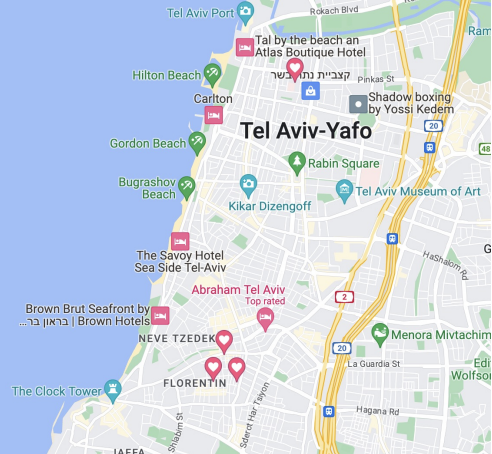
• Inner city hospital located in the heart of Tel Aviv
• Hebrew is main language, but virtually all staff and patients comfortable in English. Some patients also spoke Arabic, French, German, or Aramaic
• Direct supervision by equivalent of junior doctors, trainees, or consultants depending on the clinical setting
• Journal club twice per week in the morning and bedside teaching performed during ward rounds
Risk Assessment
Main risks highlighted during risk assessment were:
Work-related ie. needlestick injuries– took every normal precaution and received vaccinations before travel
Terrorism– was conscious of spatial awareness. Though risk is low, Israel is obviously more prone to terror attack risk than we are used to in the UK so a good spatial awareness and staying away from conflict areas. Just use your common sense really.
Quick facts (non-clinical)
Accommodation
• Lived in flatshare with 2 Israeli girls for 3 weeks, found through the friend of a friend
• Lived with my uncle for 1 week
• Both locations were accessible on foot to the hospital and the city centre
Non-clinical opportunities
• Learning the basics of a new language- learning the Hebrew alphabet and basic phrases was very useful
• A better understanding of middle eastern geopolitics- the hospital patients and staff were both Israeli and Palestinian
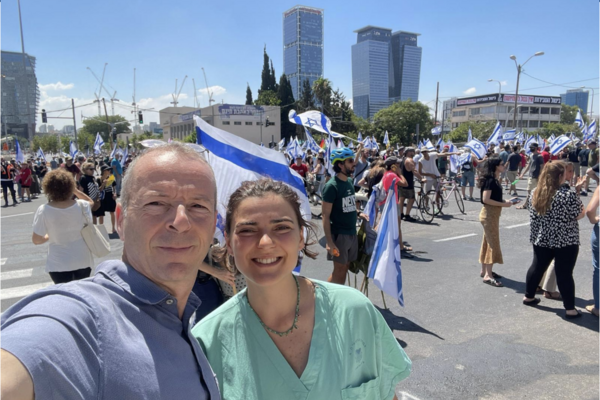
• Learning about the current political climate- doctors participated in protests and strikes
• Received 300 GBP of funding from the JMA, for which the application was shared by the medical school
Reflection
My experience was overall positive; I felt supported in the clinical environment. The healthcare system is very similar to the NHS in that it is free at point of care. Staff were engaging and curious about my experience as a medical student in Scotland, and I felt there was a good exchange of knowledge and experiences. Something I found interesting was that the children’s hospital was very friendly, like the RHC in Glasgow, which made me
think that perhaps children’s hospitals all over the world are friendlier places due to dealing with children. Before the elective I felt apprehensive. Upon arrival, and throughout the elective, I absorbed and engaged as much as possible with my elective and the city, as well as cultural aspects of Israel. Thinking back, it would have been helpful to know more Hebrew from the start of my elective. My concluding thoughts were overall very positive; I feel that I was able to make the most of my time there both academically and in terms of broadening my horizons. If I were to do it again, I would take an evening class to brush up on my language to be able to integrate better. In fact, I will hopefully return next summer to do an elective in anaesthetics and so will indeed be taking a language course!
Recommendation
I would recommend this elective if you are willing and able to experience medicine in a completely different language and cultural setting (and in a very hot country; minimum 35C every day). Israelis are very direct and may sometimes be seen as rude by British cultural standards- however, if you are able to overcome this then you will have a great experience. Tel Aviv is an active and young city.
My personal tips:
- live with Israelis to get the authentic Tel Aviv experience
- try to learn some Hebrew before you go
- doctors from all over the world train in Israel and there is great opportunity for networking and making international connections
My educational supervisor did not consent to being contacted.


